World of the Takers: The Making of A Mural
by Tallinn Horn, oil on canvas
To truly appreciate and understand the process of creating public art, I decided to create my own piece to add to the halls of Core. The following is a documentation of the process of creating my own “movable mural” that I’ve titled World of the Takers.
The Design
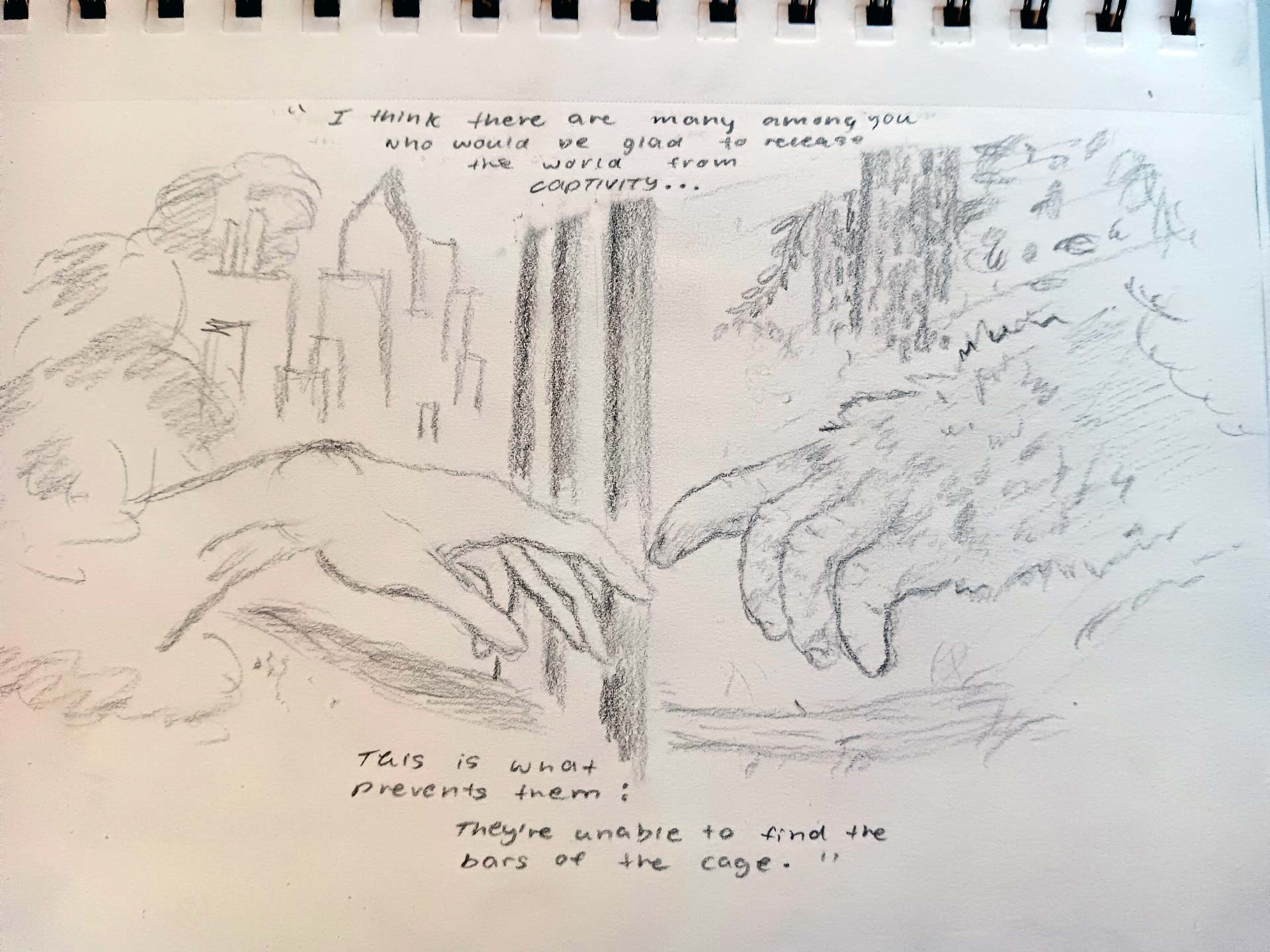
Like many murals in Core, I wanted to create a piece that related to prominent subjects in the program. Mr. Kim had requested the painting for his room, so I decided to draw from themes in the novels of his English class.

After thinking about which story felt most universal, I decided to reference Daniel Quinn’s Ishmael: the first book I ever worked with in Core. Ishmael touched upon ideas that are central to every year of Core, such as living within a single story, the flaws and beauties of Western culture, and man’s relationship with the Earth. It explores the effects of culture and the structures of society, and it felt like the perfect foundation for my painting. In my first draft, I thought about incorporating a quote from the novel: “I think there are many among you who would be glad to release the world from captivity…This is what prevents them: They’re unable to find the bars of the cage”. Though the quote never made it into the final painting, it guided my design and purpose for the piece.


The actual composition of the piece also incorporated references from other art pieces in Core. One of these was Frida Kahlo’s Self-Portrait on the Border Between Mexico and the United States. This piece, also taught in Core 9, inspired the idea of a split image between nature and industry, separated by a noticeable line. The central hands were also inspired by Micahelangelo’s The Creation of Adam, part of the Core 10 curriculum. The idea of reconnecting with one’s origins mirrored the relationship between Ishmael and the novel’s narrator, making it the perfect inspiration for my painting.
The Canvas
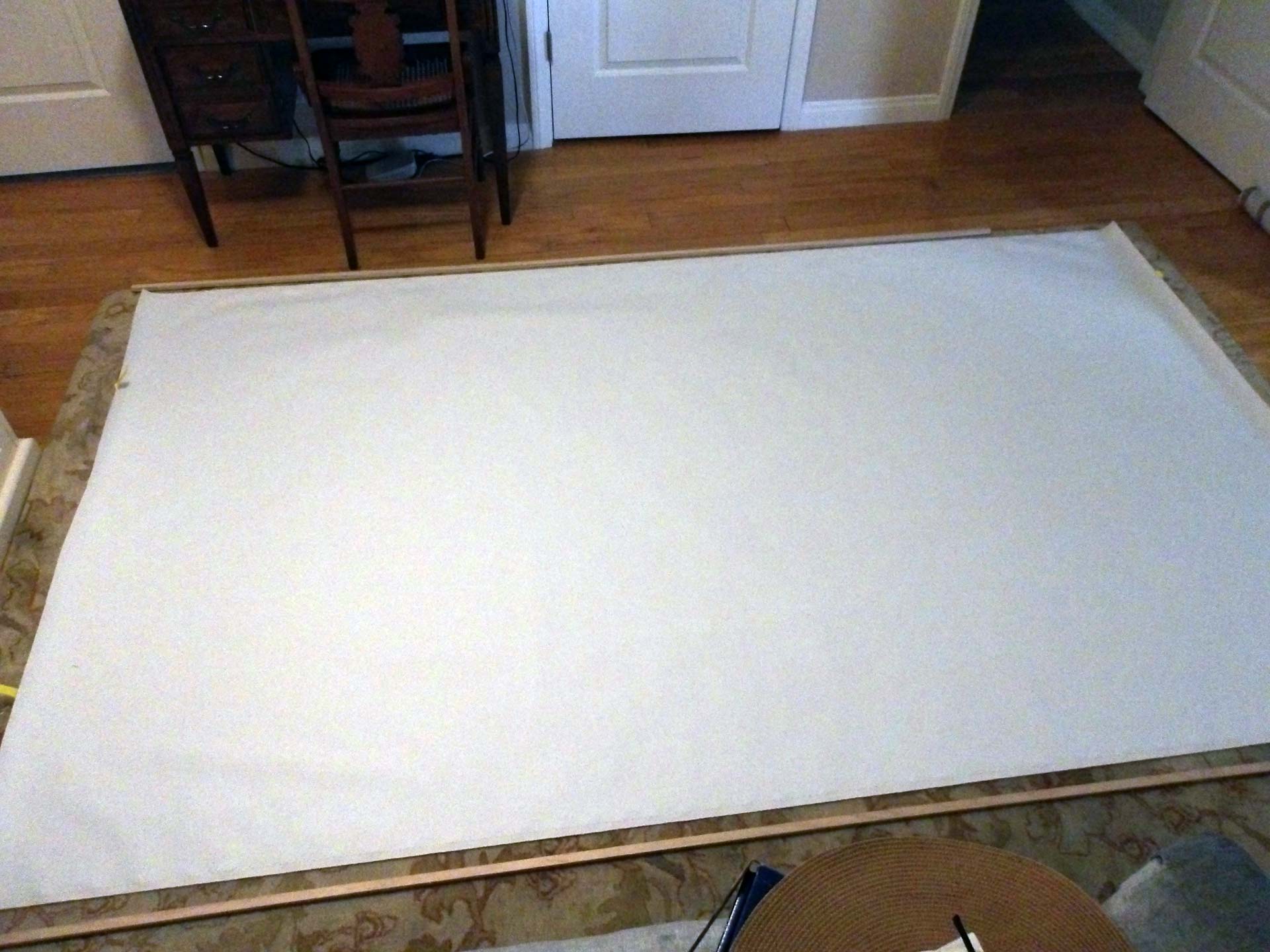
In order to ensure that my mural was transportable rather than permanently affixed to the wall, I needed to create my own canvas large enough to fill the desired space. After lots of research, I found one store that sold painter’s canvas in bulk, and ended up purchasing about three yards of pre-prepped canvas. Along the way, we picked up some large paint brushes, extra acrylic paint, and supplies like Turpenoid, linseed oil, and brush soap.
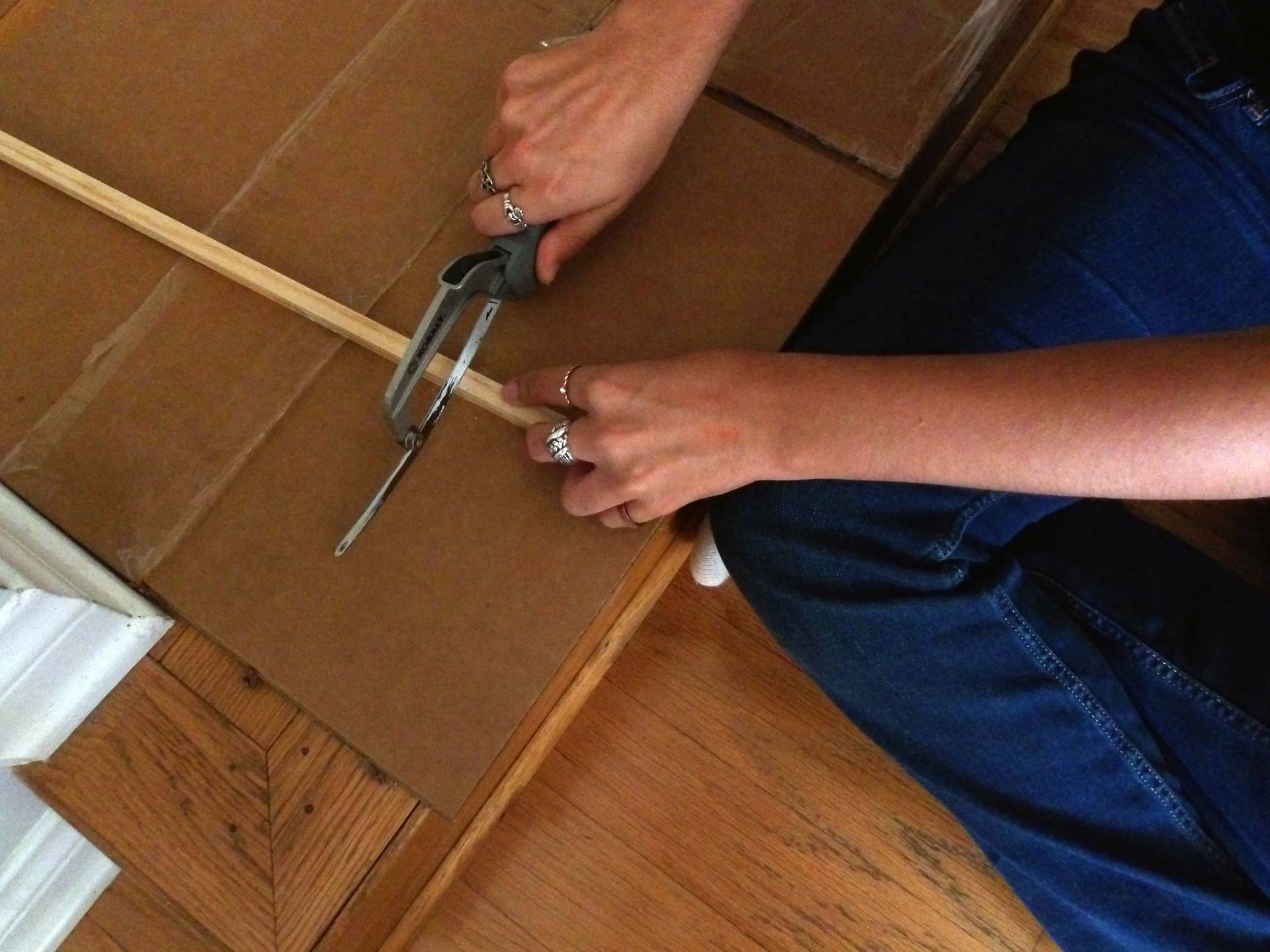
Hanging the canvas was a difficult job, and required the help of about 8 fellow Cleveland students. We nailed small hooks into the wall, and then added hooks to the top dowel. They also helped me cover the room in butcher paper to keep it paint-free. Once everything was installed, we hung the blank canvas and were ready to begin making art.
The Painting
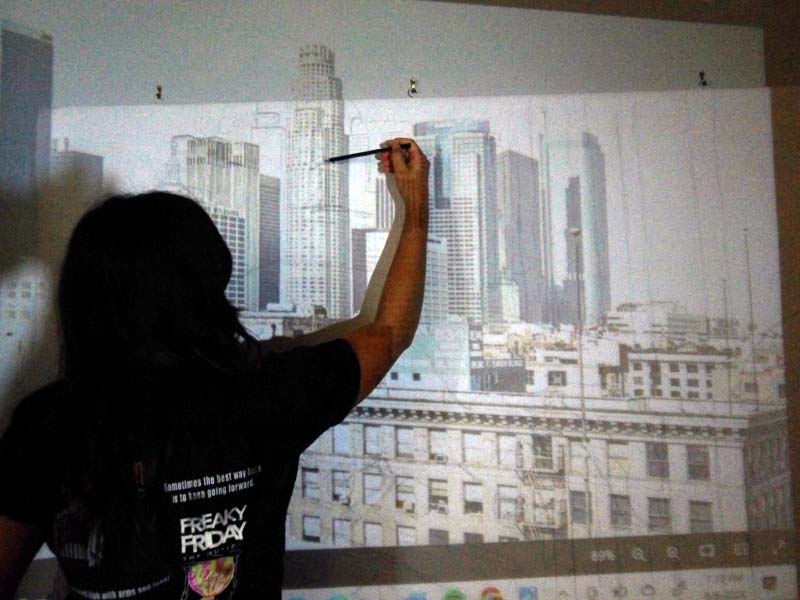
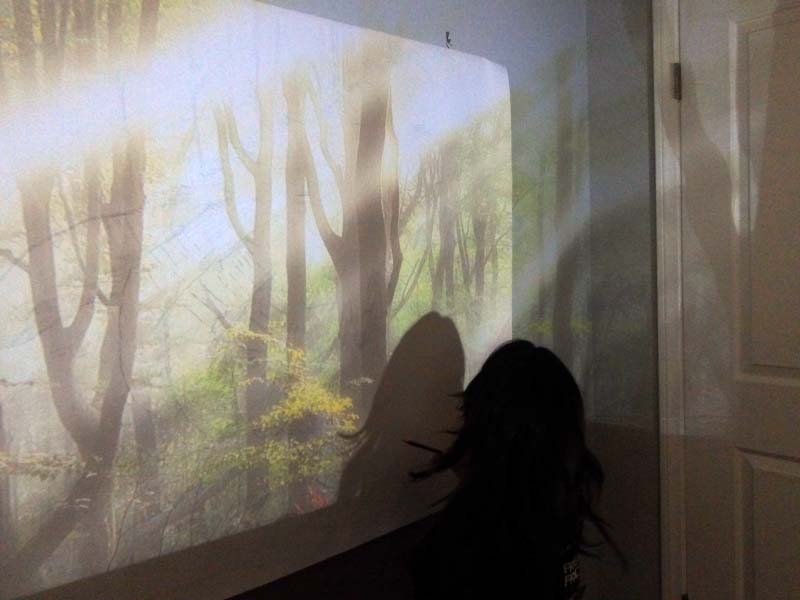
Once the drawing was completed, I sealed the charcoal with a layer of brown acrylic paint. When the paint dried, it created a barrier over my drawing, ensuring that the oil paint wouldn’t smear it.
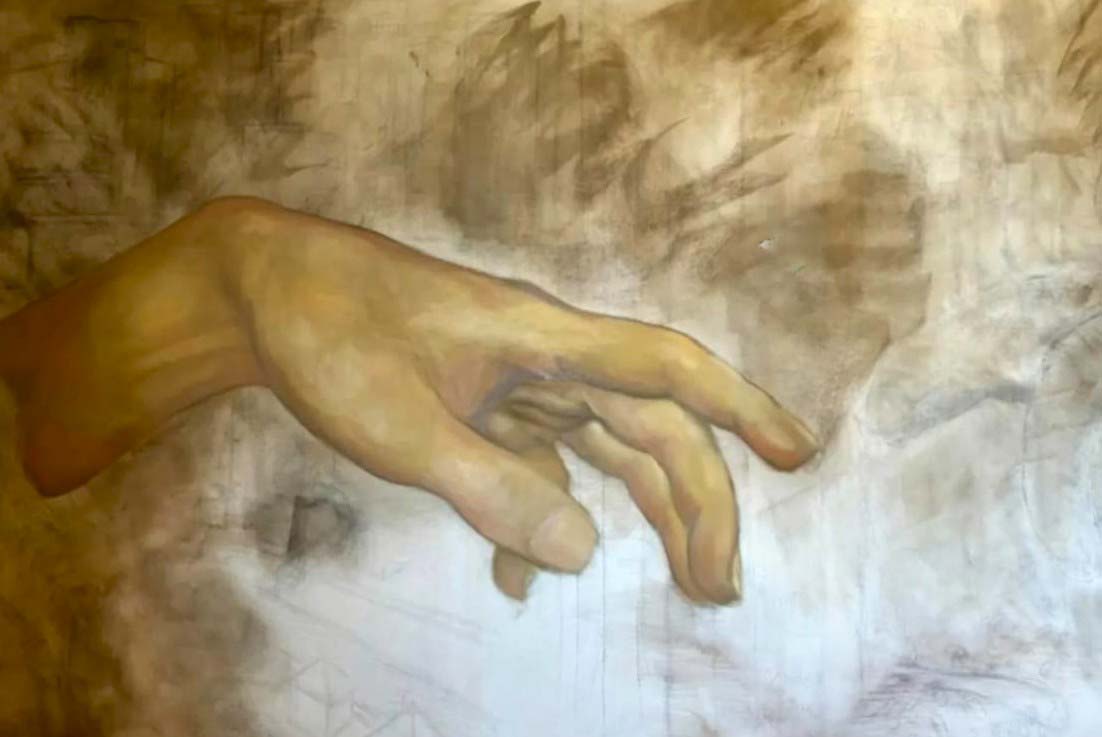


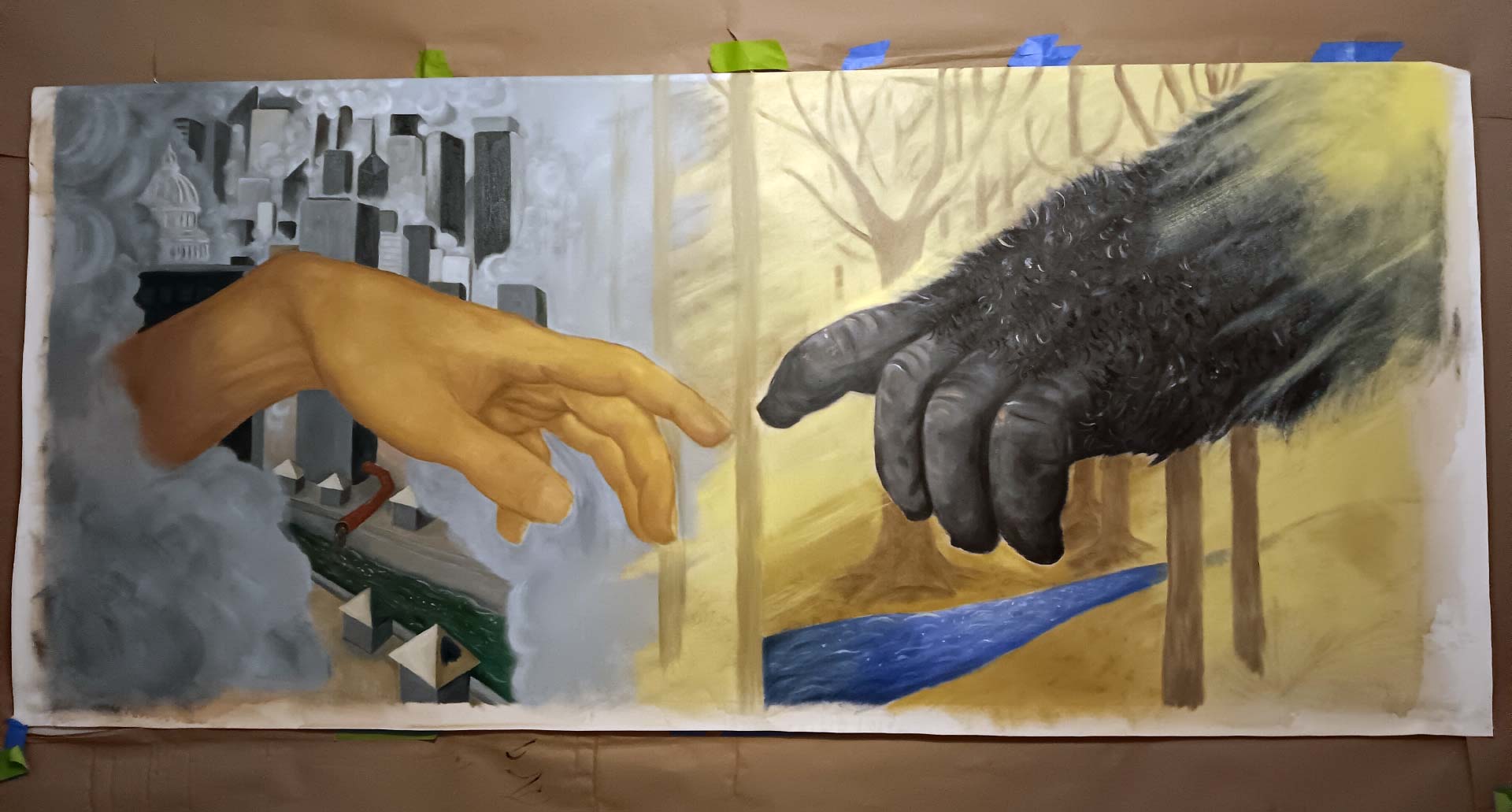


Once this was complete, the painting was done! It was hung in Mr. Kim’s room a few weeks later.
Creating this piece has been incredibly rewarding, and only strengthened my belief in how essential public art is in educational settings. As an artist, I was given the opportunity to reflect on my own learning, and recall the lessons in Core that resonated with me most. Now that it’s displayed in a classroom, I get to watch the eyes of ninth grade students light up as they see their own learning reflected on the wall. Public art benefits all, and I look forward to creating more of it in my career as a lifelong Corebaby.
About the Artist