
The Murals of Core and Why They Matter
The halls of Core have been filled with life and color by countless students over the years. Click here to explore the art decorating D and E Halls and learn more about their meaning and educational importance.
From the very beginning, Core has dedicated itself to creating critical thinkers, ready to face the future with a wide breadth of knowledge and the ability to build and nurture the kinds of ideas that make the world a better place. In every year of the curriculum, specific classes will change and shift, but one tenant of the program remains prominent in every year: Art.
Art appears in many forms throughout the Core program. Most students’ minds will immediately turn to its manifestations within the curriculum: covering Fragonard’s The Swing in 10th grade or creating The Great Gatsby inspired place settings in 11th. However, students also interact with art on a daily basis thanks to the murals that decorate the classrooms of Core.

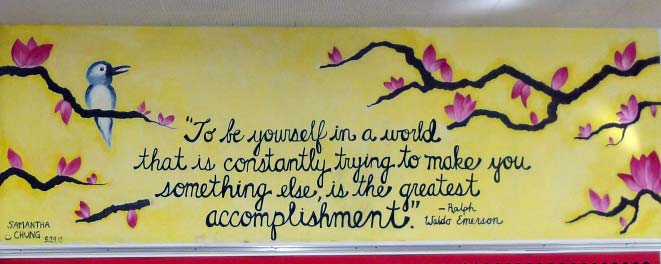
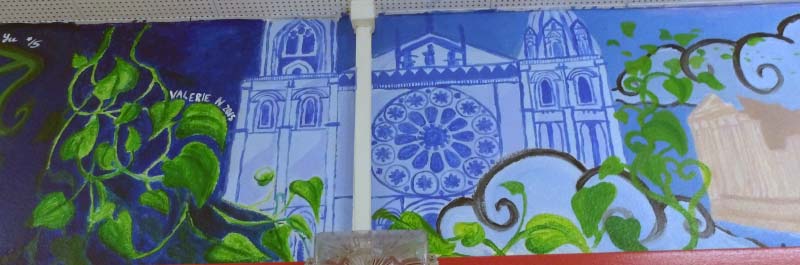
Throughout D and E Halls are paintings created by and for Core students that reflect the values of the program. In each case, the murals painted in classrooms and hallways work in tandem with the subjects and themes in each year of Core. Some, like the Bless Me, Ultima mural in room E4, are directly related to in-class lessons. In fact, Mrs. Del Pino personally commissioned the mural, creating a permanent reminder of the ideas she shares with her 9th grade classes when teaching them Rudolfo Anaya’s novel. Her room also features a wall decorated with Dia de Los Muertos skulls and flowering tree branches, painted by a student in collaboration with Ms. Del Pino as a celebration of Latino heritage. This history and culture is taught in both 9th and 11th grade, and the design further connects students to specific parts of their curriculum: such as the “Skulls and Quarters” short story read in freshman year.


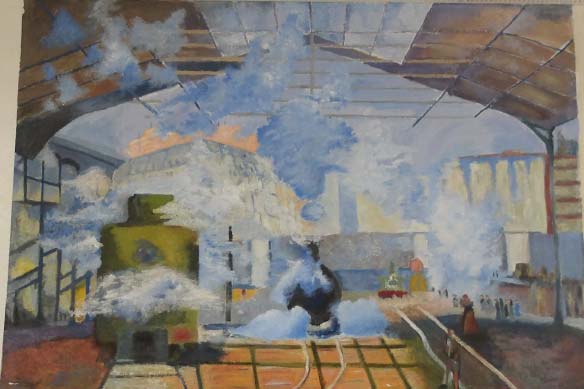
Across the way, in room D4, is yet another mural with a direct connection to the Core program. The Last Supper is one of many recreations of the master paintings taught in Core 10 that adorn Mr. Basinger’s room. On the adjacent walls are mural versions of A Bar at the Folies-Bergère, Monet’s Water Lilies, Saturn Devouring His Son, Gare-Saint Lazare, and more. These help students recall what they were taught in class and allow for further consideration of the art. As they sit in Mr. Basinger’s room, they are free to notice new details and symbols, continuing their journey with the piece outside of class.

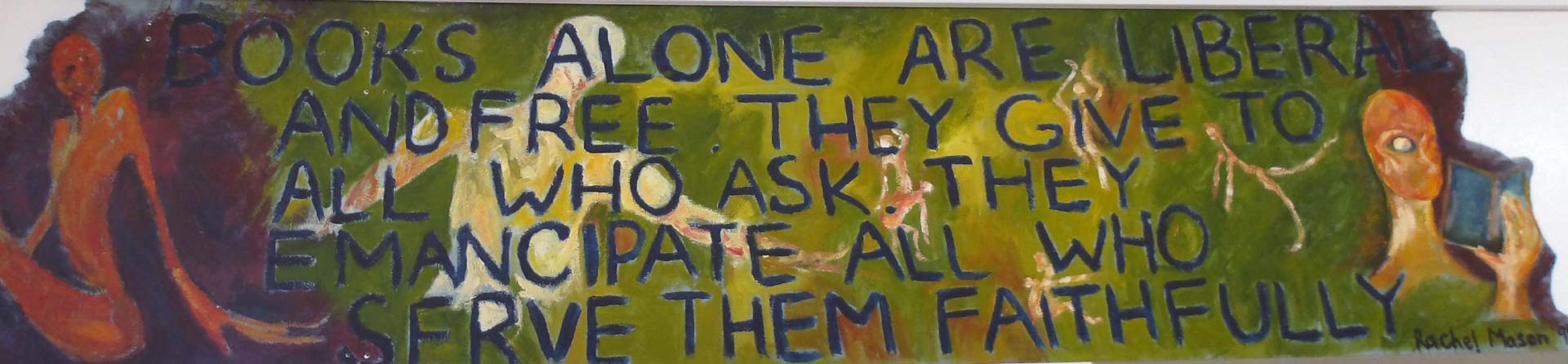
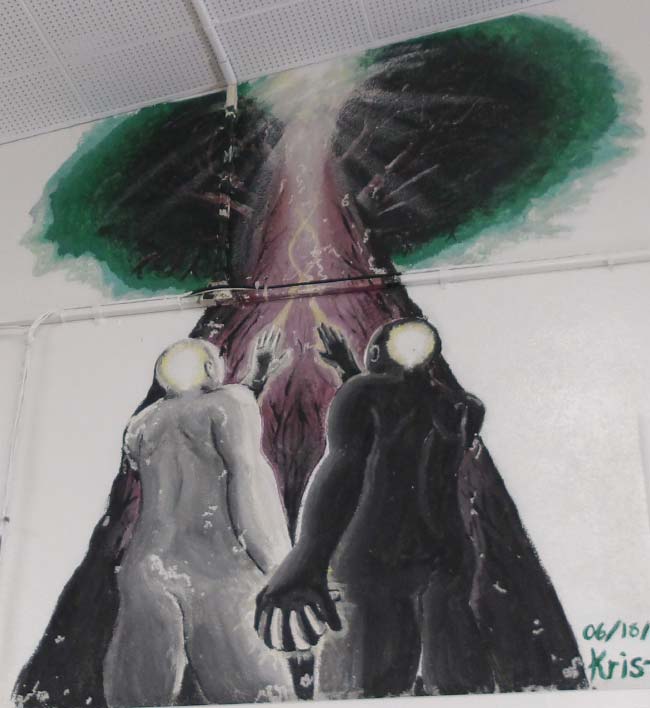
Other murals are connected to Core through the themes and ideas they express. Room E10 is filled with paintings referencing freedom, growth, the roots of oppression, and more. Though none are exact replicas of art taught in the classroom, they reference lessons taught in Core 11 on American history and culture, racial realities in America, and the impacts of socialization. Near Mr. Saavedra’s desk in the corner of the room, students can see two paintings that serve as reminders of the value of unity and using one’s voice to make change.

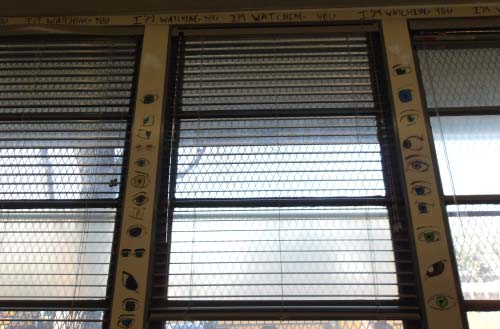
In rooms E1 and E3, even more connections can be made. E1 hosts a variety of abstract wall murals added throughout the years. Though the students who made them graduated long ago, their meaning continues to hold weight with the class of seniors currently occupying the room. Adorning the room’s window frames are countless watching eyes, lending themselves to Mr. Bartlett’s lessons on the philosophies of Hume and Foucault and their views on how perception impacts human lives. Next door, students in Core 9 enjoy the vision of a large African-style mask surrounded by rising waves and abstract designs. The design serves as a reference to their third unit, which teaches African history both prior to and following European arrival and colonization. The mask shows the power of early African kingdoms and the inspirational beauty of their art.


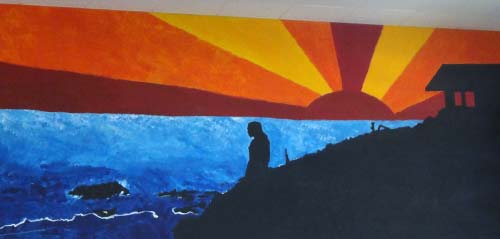
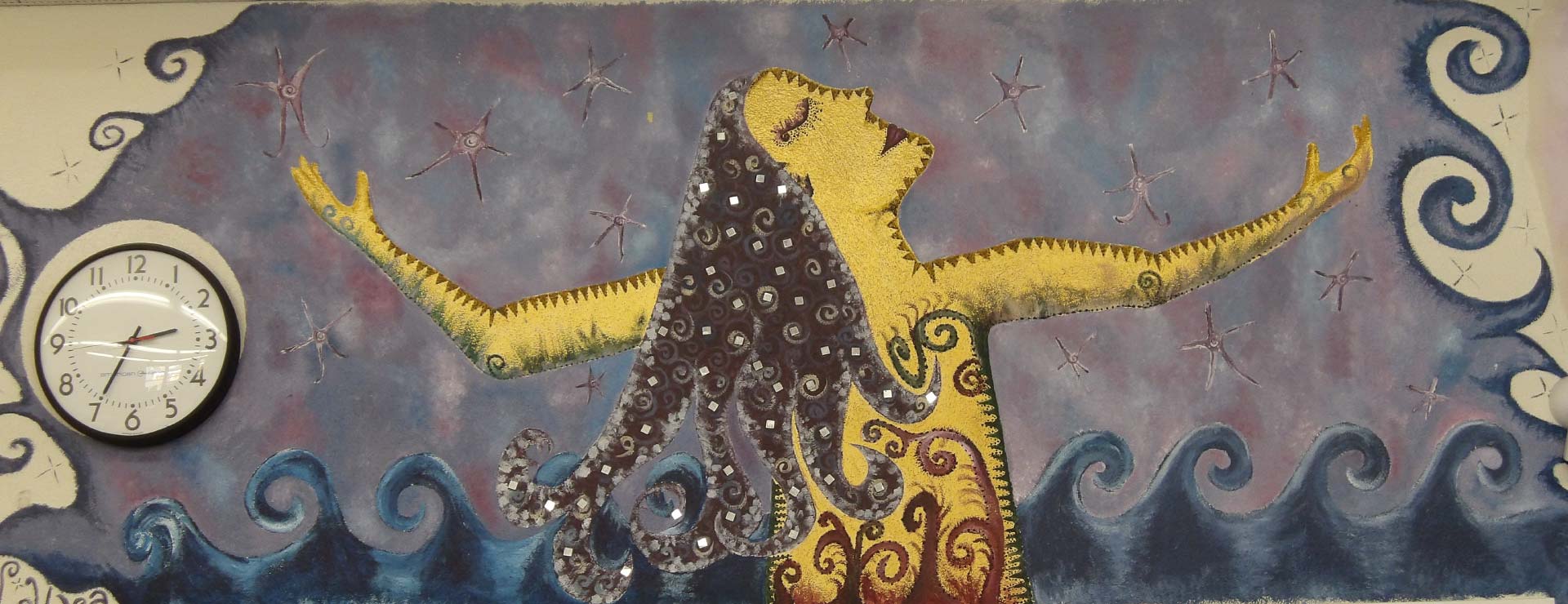
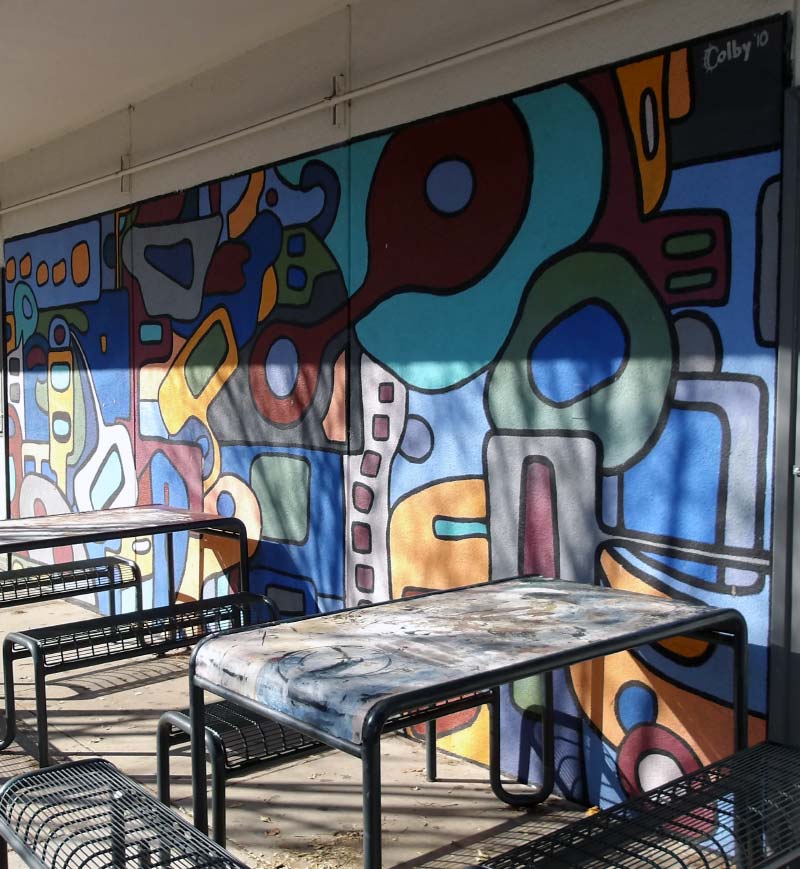


Diego Rivera, one of the first artists taught in the Core curriculum, knew this. When painting The History of Mexico in the Palacio Nacional in Mexico City, he aimed to educate an illiterate public on their own history. He gave his people the gift of knowledge, and allowed them to expand their minds by interpreting and analyzing his mural. To him, Mexican muralism was how “the people regained their own language and spoke through the receptors that were capable of capturing, condensing, and re-transmitting the popular voice.” Core students, and public artists around the world, have done the same thing throughout the years. Each painter has been able to bring their own voice to the walls of their class room, and each painting left behind has become an opportunity to form a new idea- a spark of inspiration that builds the kind of thinkers who can change the world.